IS YOUR BIG IDEA READY
TO GO WILD?
DON’T BE SHY. SAY HI TO UNLOCK CREATIVITY AND INNOVATION FOR YOUR SEAMLESS PROJECT

0

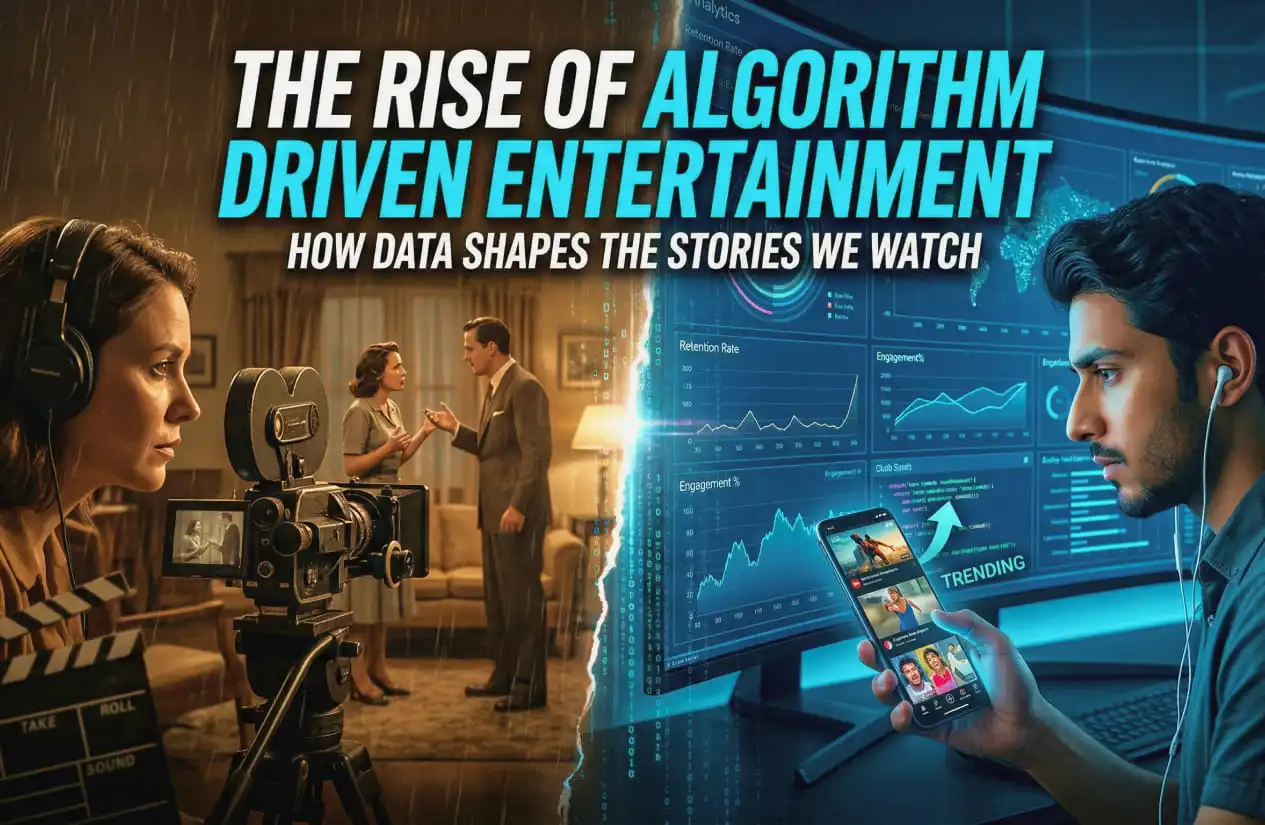
Entertainment is no longer driven only by writers, directors, or producers. It is increasingly shaped by algorithms. The rise of data driven platforms has quietly changed how stories are created, packaged, and distributed. And most of the industry is still adjusting to this shift.
Today, platforms do not just host content. They measure it. Every second watched, every pause, every skip, every replay becomes data. This data feeds recommendation systems that decide what gets promoted and what gets buried. In many cases, the algorithm has more influence on visibility than the marketing budget.
Look at global streaming platforms like Netflix and Amazon Prime Video. They analyze viewer behavior at scale. If a large segment of users stops watching a show after episode two, that signal matters. If crime thrillers perform better in a specific region, more crime thrillers get commissioned. Data does not just recommend content. It shapes future production decisions.
On short form platforms like YouTube and TikTok, the influence is even stronger. The algorithm decides within seconds whether a video deserves wider reach. Retention rate, completion percentage, and watch time directly impact distribution. Creators quickly adapt. They design hooks in the first three seconds. They structure stories to maintain tension every few moments. This is not creative instinct alone. It is algorithmic survival.
In Pakistan, this shift is visible in digital entertainment. Creators are studying analytics dashboards as seriously as scripts. Thumbnail testing, title optimization, and audience retention graphs now influence creative direction. Drama clips are edited for vertical viewing. Stand up comedy is cut into short, punch driven segments. Songs are structured for replay value. The format is evolving because the system rewards certain behaviors.
The opportunity is massive, but so is the risk. When algorithms reward what keeps people watching, they often prioritize intensity over depth. Sensation over subtlety. Shock over slow storytelling. This can push the industry toward formula driven content. If betrayal works, it is repeated. If controversy trends, it is amplified. If loud reactions increase watch time, they become standard.
Another consequence is creative compression. Stories become shorter, faster, and more reactive. Writers may begin thinking about retention curves instead of narrative arcs. Directors may focus on moments that trend rather than scenes that linger. Over time, the industry risks optimizing for performance metrics instead of cultural impact.
However, algorithms are not villains. They are mirrors. They reflect audience behavior at scale. If viewers reward meaningful content with watch time, the system promotes it. If they choose shallow entertainment, the system amplifies that instead. The real power still lies in audience choice.
The future of entertainment will not belong only to artists or only to data scientists. It will belong to those who understand both. Creative instinct must coexist with performance insight. Storytelling must respect analytics, but not surrender to it. The strongest productions will be those that use data to refine distribution while protecting narrative depth.
At Peace Productions, we believe entertainment and advertising now operate under the same rule. Attention is measured. Storytelling is evaluated in real time. We study performance patterns, but we do not let dashboards replace direction. Data informs decisions, but human judgment shapes meaning. Because in an algorithm driven world, visibility can be engineered, but cultural impact still has to be earned.